


Six connected tools that cut a tire request from 10 minutes to 2 and restarted a used-tire business
A busy shop selling new and used tires, plus brakes, alignment, engine, AC and body work. Lorryn built one tire search across every supplier and the shop's own used stock, a photo-to-inventory tool, two AI agents and online repair booking, all feeding the same team and the same inventory.
The whole system
Each tool works on its own, and they share one inventory and one team
Every supplier's stock, shown as the shop's own inventory
Customers pick their vehicle and trim, and the right tire size fills in by itself. The widget then pulls live options from every supplier the shop works with and merges them with the shop's used tires, so customers see one inventory, far bigger than any single catalog.
The used-tire business, back from zero
Typing every tire into Excel and then again into the warehouse system was so slow that the shop stopped buying used tires. Now one photo reads the size off the sidewall, the tire gets a quality grade from its tread depth, and it lands in the warehouse system and on the website at once.
Three photos in, a listing out
This is the phone app the shop uses to add a used tire. Staff take three photos, tap Read Sidewall, check the fields it marks, and save.
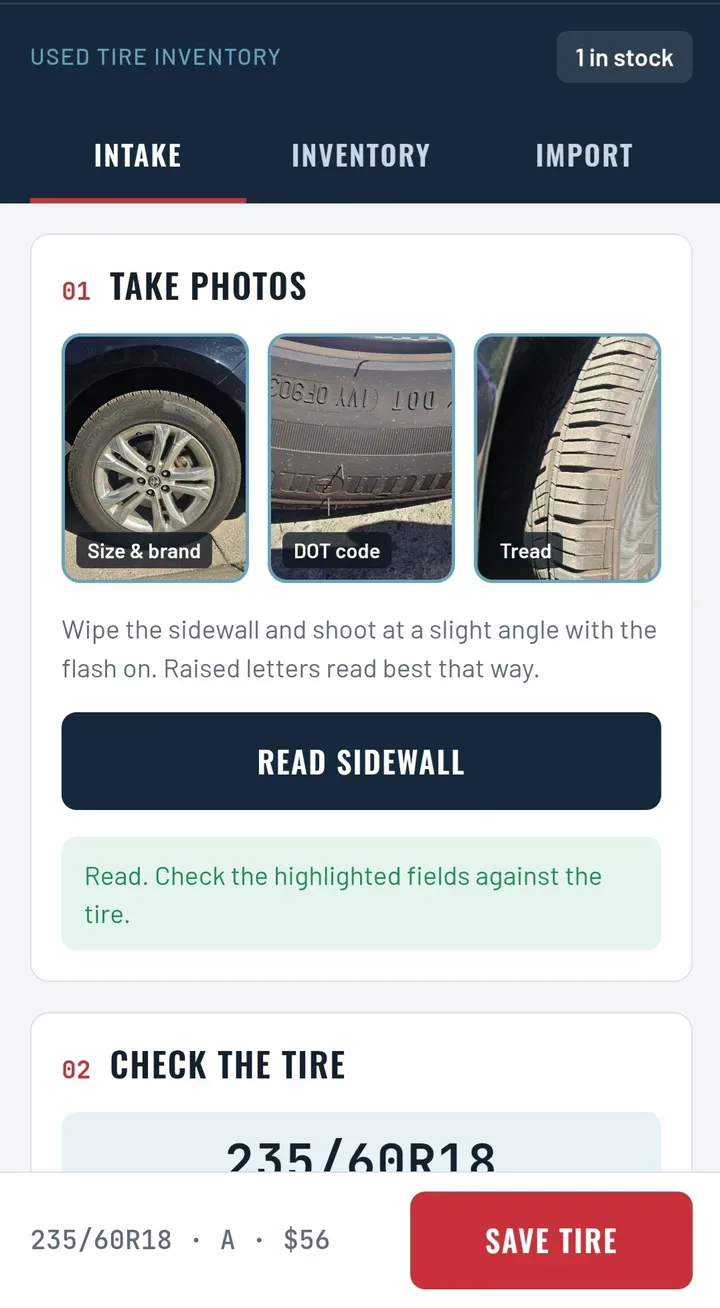
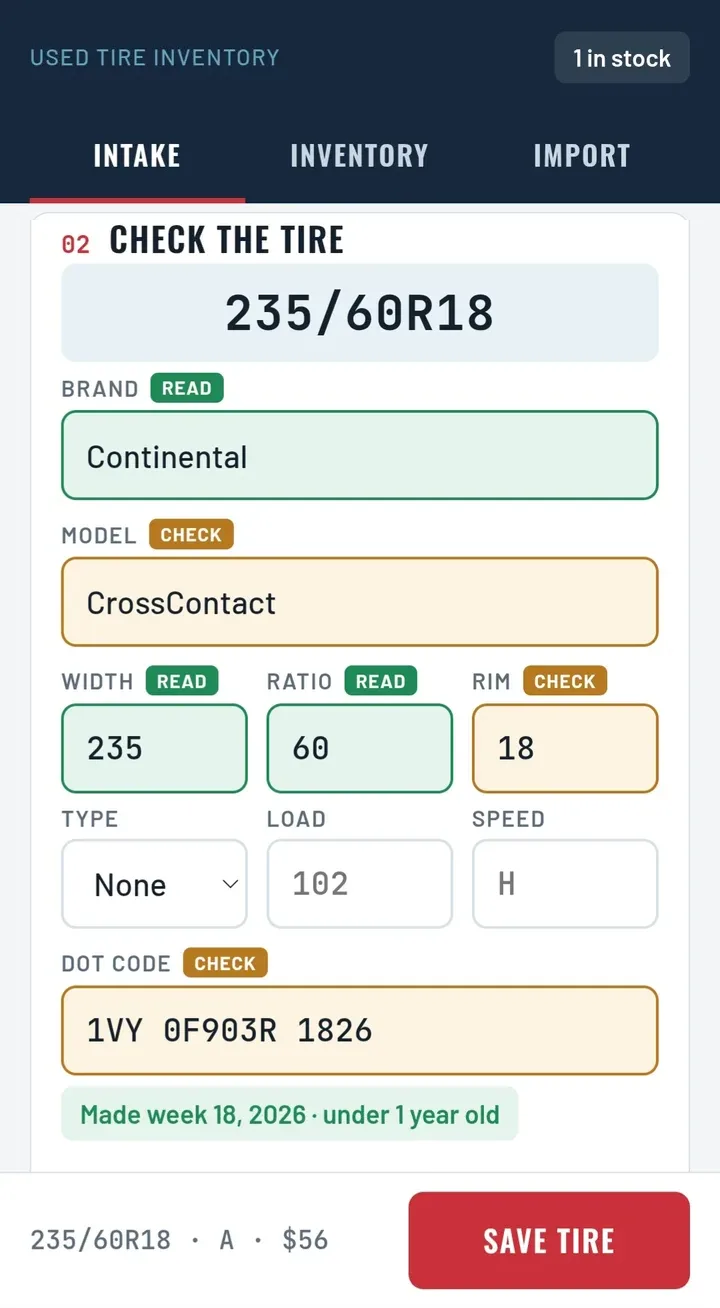
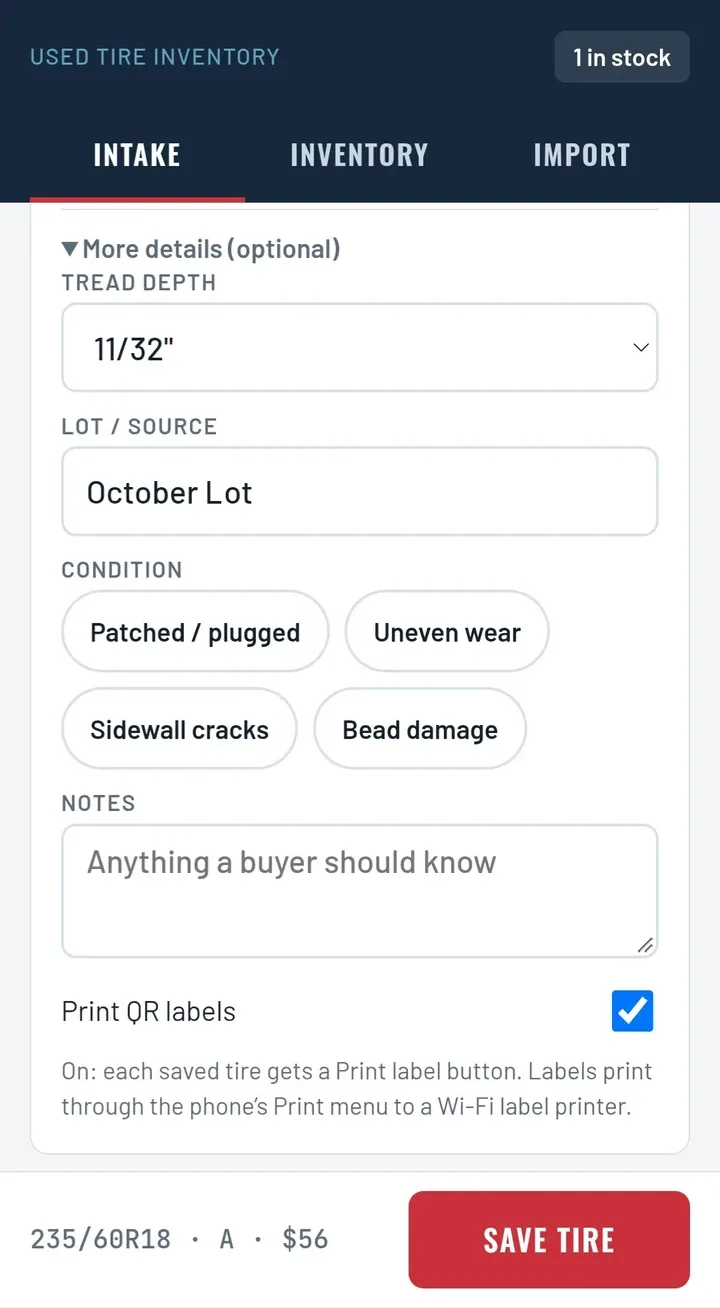
Each sidewall read costs about 2 cents in AI usage ($0.016 per tire).
Screens from the live app, with the shop's name removed.
"Which one should I get?" answered from real reviews
Right inside the search, customers can ask how two tires differ, or whether a used set is worth it. The agent answers from a summary of what drivers say in online reviews, in plain words, and only recommends tires that are actually available.
From search to a complete request the team just confirms
When a customer is ready, the intake agent collects everything the shop needs: vehicle, tires, extras, a preferred install time and how to reach them. The rep gets one clean request instead of a phone call that starts from "what car do you drive?"
Tap the problem, pick a time, done
Tires bring customers in, and everything else is under the same roof. Customers tap what's wrong with their car, and the schedule agent offers open times within shop hours, Monday to Friday 8–6 and Saturday 9–5. Tire installs from the intake agent land in the same calendar.
Found on Google, and every visit has somewhere to go
Pages rebuilt around what local drivers search for, like "used tires near me", "brake repair" and "wheel alignment". Real Google reviews and short videos of real jobs sit next to every call to action, and each visit ends in a tire price or a booking instead of a lost tab.
What changed, task by task
Each job before and after, and what the owner can check in the shop’s own systems.
Time per task, before and after
Each bar is one job, done once. Step times worked out with the owner.
What the owner can check
Facts the shop’s own systems show
Five more tools, built on what the shop already has
Each one uses the same tire search, intake agent and shop calendar that are running today.
Missed-call text-back
After-hours phone line
Quote follow-up
Service reminders
Review requests
Planned with the owner. Times are targets, not results. Texts and calls go only to customers who contacted the business or agreed to hear from it, and they always say they are automated.
Questions shop owners ask
Do customers see which supplier a tire comes from?
No. They see one inventory with stock and timing; the shop sees the supplier behind each option.
Can software really read a tire's size from a photo?
Yes. Size and specs are molded into the sidewall in a standard format. Anything unclear goes to a person to check.
Did the shop have to replace its systems?
No. Everything feeds the warehouse system and calendar the shop already used.
Times are per task, worked out with the owner by walking through each step of the old process and the new one. Your times will depend on how your shop runs today. We don’t publish clients’ revenue.